René Magritte
The Greyness and the Surreal


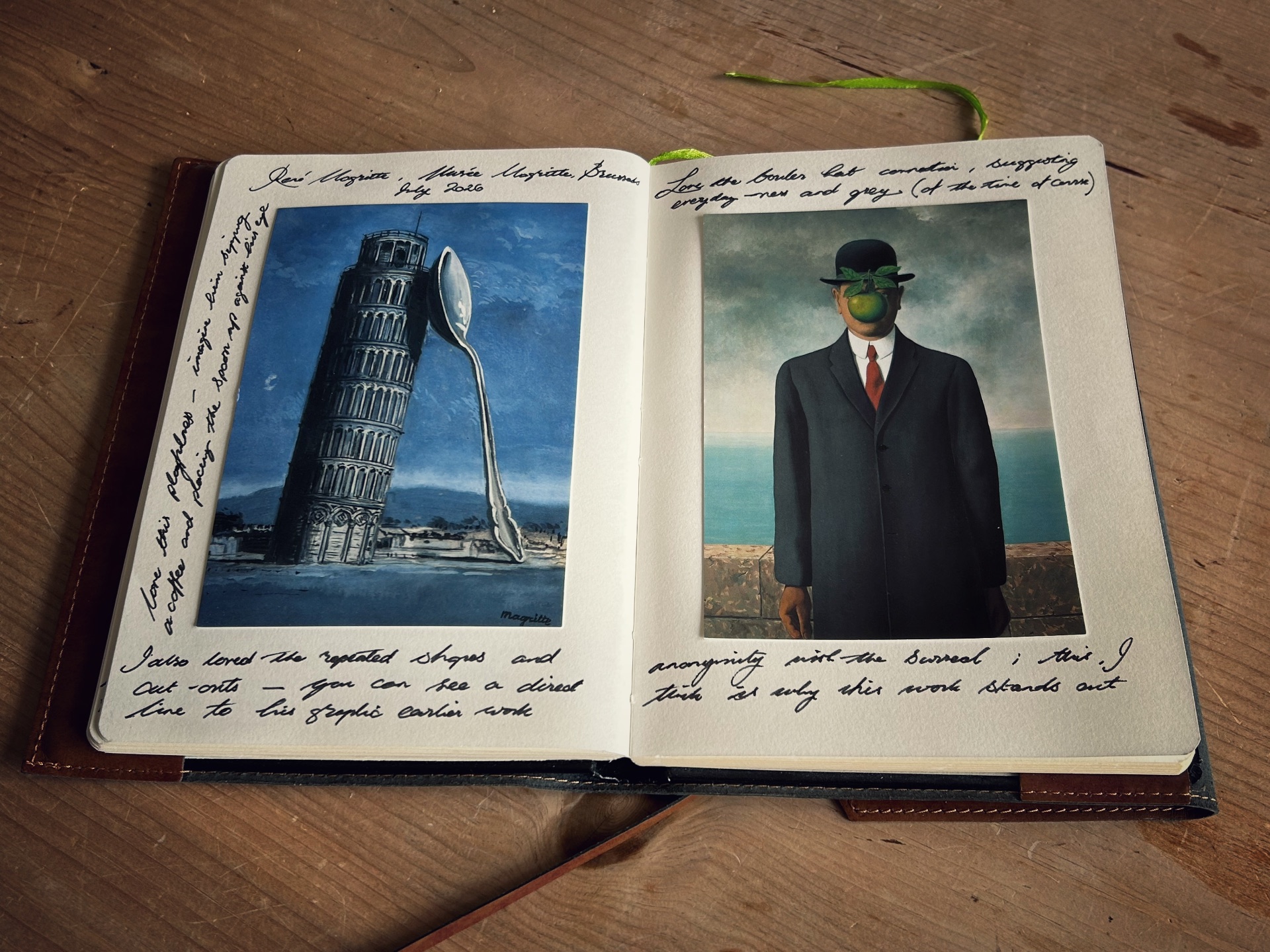
Whilst on holiday last week in Belgium, I had a chance to visit the Musée Magritte in Bruxelles (https://musee-magritte-museum.be/) and what a great experience.
I’ve always been fascinated by the surrealists and what makes Magritte different for me, say from Dalí or Miró, is his ability to see the surreal from the ordinary. The well-known paintings with a bowler hatted man, suggest the ordinary greyness of middle class life at the time but juxtaposed with surreal objects; the apple in the Son of Man or the dove in Man in a Bowler Hat. As Magritte poses himself, the question we all ask is why the apple or the dove, but, of course, it’s the wrong question. It’s not about ‘why’, it’s about celebrating the mystery and playfulness.
What also strikes me about his work is the sheer scale of just having fun; take that spoon propping up the Leaning Tower in the Night of Pisa, I can imagine him in childlike playfulness, placing a teaspoon in front of his eyes and, scaling it to prop the tower up.
You can also see the influence of his early graphic design career in the many paintings that use graphical techniques of repetition, cut-out and lettering (his own script hand was beautiful).
Overall, I think his work is stunning and has influenced many other artists, such as Ruscha, Warhol and Johns.

Log in to leave a note.